Skip to content Skip to sidebar Skip to footer

Author page: admin

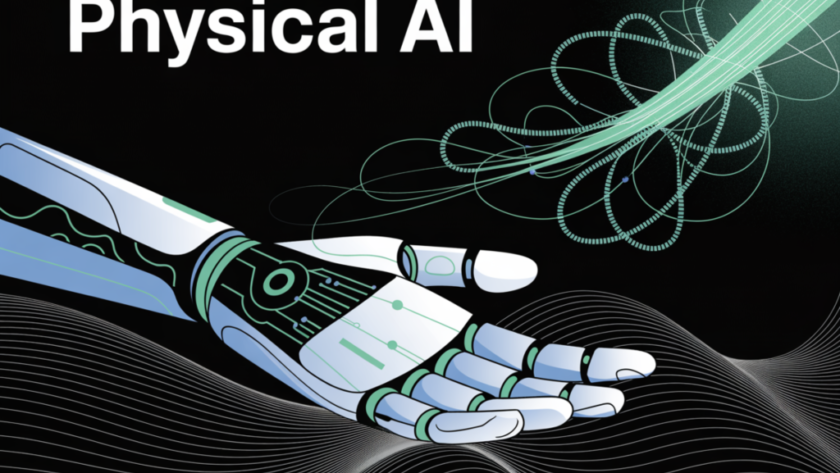
Physical AI: Bridging Robotics, Material Science, and Artificial Intelligence for Next-Gen Embodied Systems

What Do We Mean by “Physical AI”? Artificial intelligence in robotics is not just a matter of clever algorithms. Robots operate in the physical world, and their intelligence emerges from the co-design of body and brain. Physical AI describes this integration, where materials, actuation, sensing, and computation shape how learning policies function. The term was…

Read More

Thinking Machines Lab Makes Tinker Generally Available: Adds Kimi K2 Thinking And Qwen3-VL Vision Input

Thinking Machines Lab has moved its Tinker training API into general availability and added 3 major capabilities, support for the Kimi K2 Thinking reasoning model, OpenAI compatible sampling, and image input through Qwen3-VL vision language models. For AI engineers, this turns Tinker into a practical way to fine tune frontier models without building distributed training…

Read More

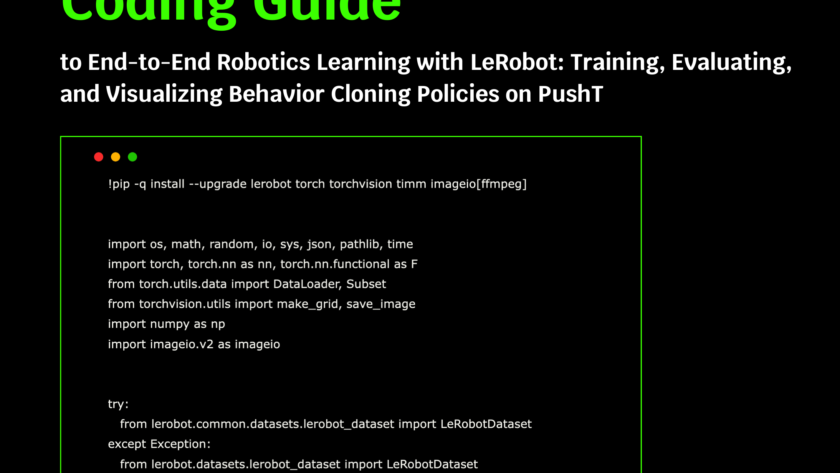
A Coding Guide to End-to-End Robotics Learning with LeRobot: Training, Evaluating, and Visualizing Behavior Cloning Policies on PushT

In this tutorial, we walk step by step through using Hugging Face’s LeRobot library to train and evaluate a behavior-cloning policy on the PushT dataset. We begin by setting up the environment in Google Colab, installing the required dependencies, and loading the dataset through LeRobot’s unified API. We then design a compact visuomotor policy that…

Read More

5 Powerful Python Decorators to Optimize LLM Applications

Image by Editor   #  Introduction   Python decorators are tailor-made solutions that are designed to help simplify complex software logic in a variety of applications, including LLM-based ones. Dealing with LLMs often involves coping with unpredictable, slow—and frequently expensive—third-party APIs, and decorators have a lot to offer for making this task cleaner by wrapping,…

Read More