# Introduction
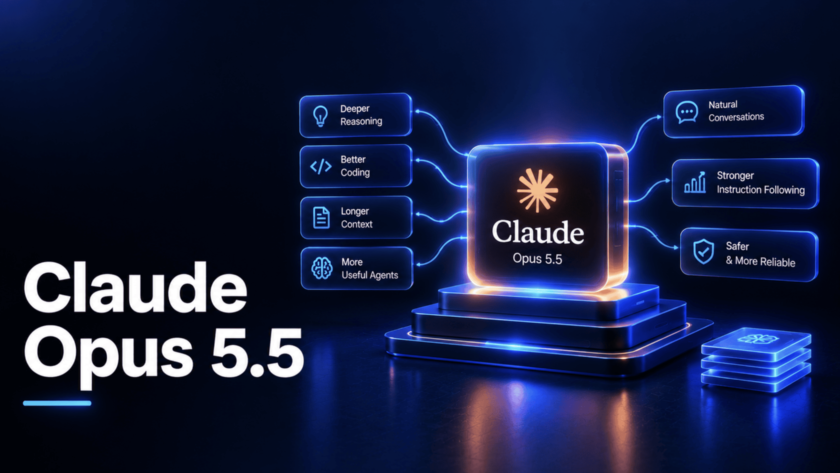
You want to add Claude to a Python application. Creating an account and making your first API call is straightforward. The official documentation can get you from zero to a working request in a few minutes. The next questions are usually more practical:
What does the response object contain?
How do…
# Introducing MCP
Every developer building with local AI hits the same wall eventually. The model works. It reasons well, writes solid code, and answers complex questions. But it cannot do everything. It cannot query your database, open a GitHub issue, or call your internal API. You are left writing custom Python wrappers…
# Introduction
Gemini in Google Sheets is a powerful AI integration from Google that lets you create, populate, analyze, and manage spreadsheets using natural language prompts. It can help you build Google Sheets from scratch. Instead of manually creating tables, formulas, and layouts, you can describe what you need, and Gemini can generate…
# Introduction
I know that when beginners start learning machine learning, things seem easy at first. You follow a tutorial that asks you to load a dataset, train a model, and then you see something like this: loss = "mse" or criterion = nn.CrossEntropyLoss().
And just like that, the tutorial starts talking about…
# Introduction
If you work with sensor readings, server metrics, or any data that arrives over time, you already know that standard scikit-learn pipelines don't quite fit. Time series data has structure that tabular models ignore: seasonality, trend, temporal ordering, and the fact that future values depend on past ones.
sktime is a…
# Introduction
Visualize this: a multi-agent workflow that reads files, writes patches, runs tests, and iterates across four services, making 400 API calls in a single afternoon. The notification arrives. You have crossed the soft limit again. Every token costs money, every prompt sends your proprietary code to a third-party server, and the…
# Introduction
A model that says it is 90% confident should be right 90% of the time. When that relationship breaks down, you get a miscalibration problem. The model's scores stop telling you anything useful about reliability.
For large language models (LLMs), miscalibration is widespread. A 2024 NAACL survey found that confidence scores…
# Introduction
For a long time, running transformer models meant maintaining a Python server, paying for GPU time, and routing every inference request through an API. The user typed something, it left their machine, touched your infrastructure, and came back as a prediction. That architecture made sense when the models were too large…
# Introduction
Training a machine learning model and observing the loss decrease is a feeling of progress, until the validation accuracy reaches a plateau or the loss begins to spike, and you're not sure what caused it. At that point, most people add more logging or start tuning hyperparameters, hoping something changes. What…
# Introduction
Even as AI can now generate huge amounts of code, system design remains one of the few skills that cannot be easily replaced. Writing code is only one part of building real products. Designing scalable, reliable, and efficient systems still requires experience, trade-offs, stakeholder discussions, and strong engineering judgment.
That is…