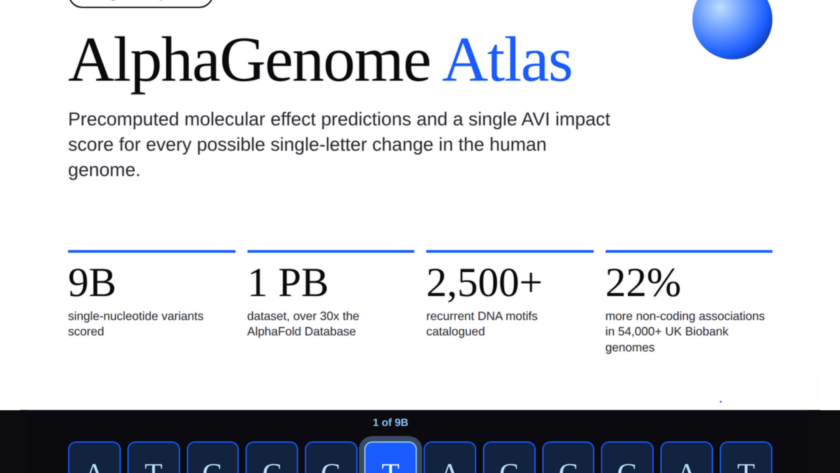
Google DeepMind has released AlphaGenome Atlas, a catalogue of precomputed predictions for the molecular effects of every possible single-nucleotide variant in the human genome. That is roughly 9 billion single-letter changes. The release also introduces the AlphaGenome Variant Impact (AVI) score, a single number that ranks variants by predicted impact, plus per-variant feature attributions and…
Defenders wanting to use advanced AI have faced a difficult dilemma: adopt enormous frontier models that could be expensive to deploy and difficult to control across enterprise codebases, or turn to smaller open-weight models that might struggle with complex vulnerability remediation and require teams to build their own tooling and infrastructure from scratch. Until now.…
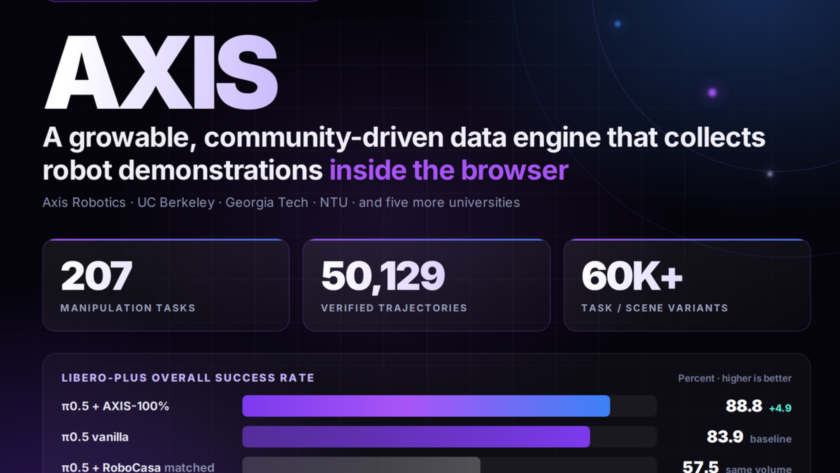
Robot manipulation datasets have grown far slower than the models trained on them, mostly because collection stays closed and centralized. Expert operators gather demonstrations on lab hardware, process them offline, and ship a fixed benchmark that never grows again. A research team from Axis Robotics, UC Berkeley, Georgia Tech, NTU… is proposing a different shape…
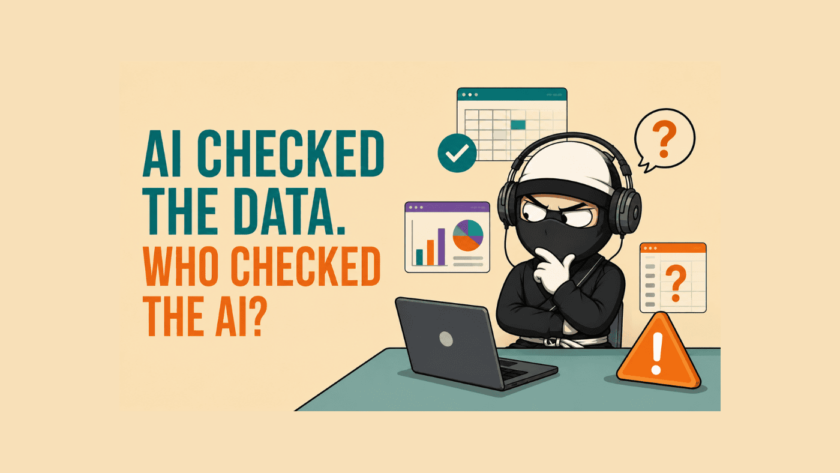
We ran an experiment: three small datasets, one AI model, and the questions a business team asks in a normal week — what's our average delivery time, which region is our best performer, how many athletes are in this file.
Then we added a review pass. We handed the model its own answer back and…
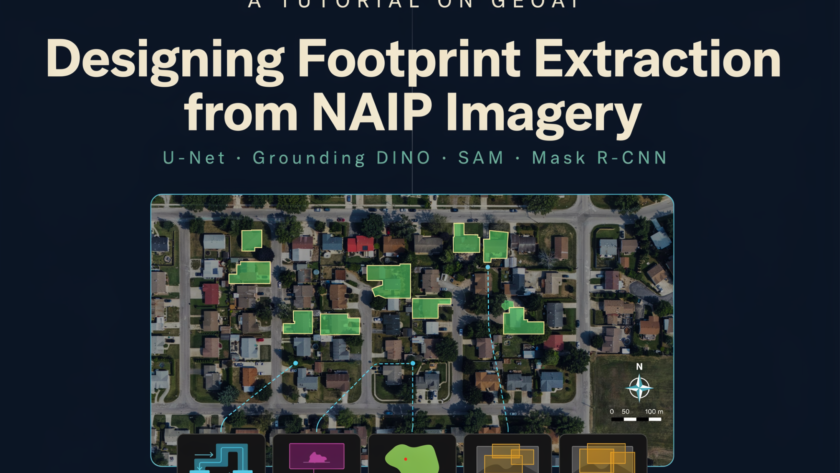
In this tutorial, we design a complete GeoAI workflow for extracting building footprints from high-resolution NAIP aerial imagery. We begin by configuring the geospatial deep learning environment, downloading raster imagery and vector labels, and inspecting their spatial properties before generating georeferenced image chips and segmentation masks. We then train a U-Net model with a ResNet-34…
Real-world data at continuous global scale WeatherNext 3's biggest leap forward is what it learns from. Most AI weather models, including WeatherNext 2, are trained on data from numerical weather prediction (NWP) models. Although useful, NWP models are complex, supercomputer-driven physics simulations that carry a six-hour data lag. This lag can lead to biases for…
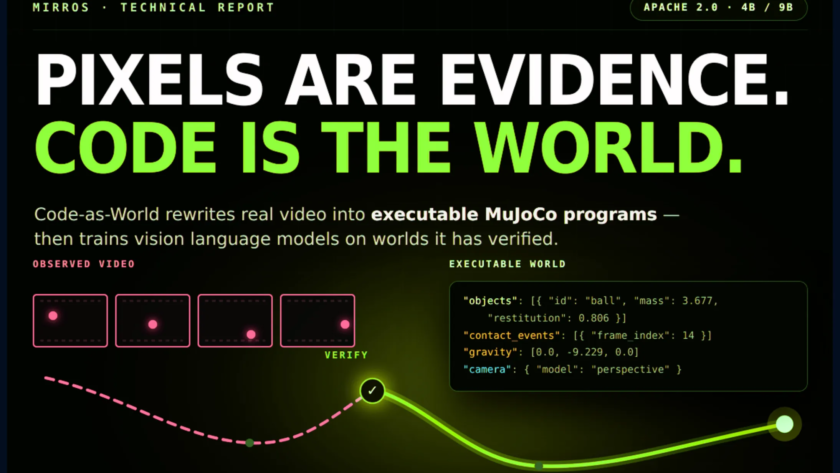
MirroS released Code-as-World: a paradigm that represents physical worlds through executable world representations. The argument is narrow and testable: pixels are evidence of a physical scene, not its ontology. A video model can predict plausible frames without ever representing mass, contact, or gravity. So instead of pixels, latents, or captions, Code-as-World represents a scene as…
Introduction
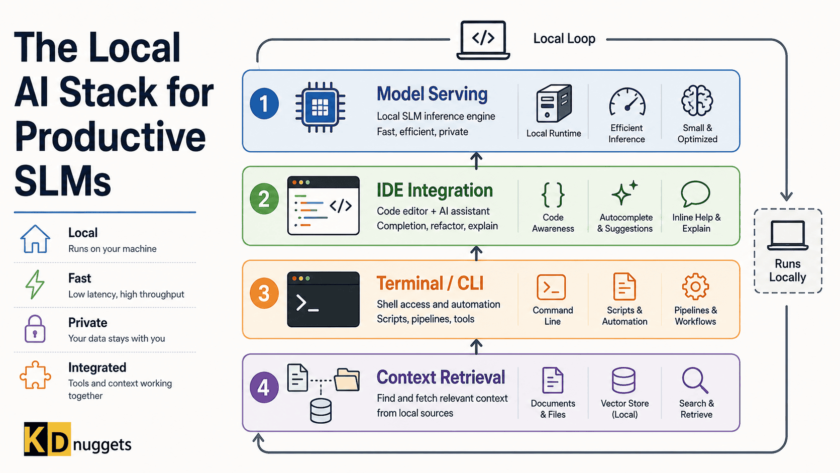
Running a small language model locally is straightforward. Running one productively — inside a real development workflow, with proper context, tool access, and iteration speed — is a different problem entirely.
The gap between "I got a model responding in my terminal" and "I have a local AI setup that actually improves how I…
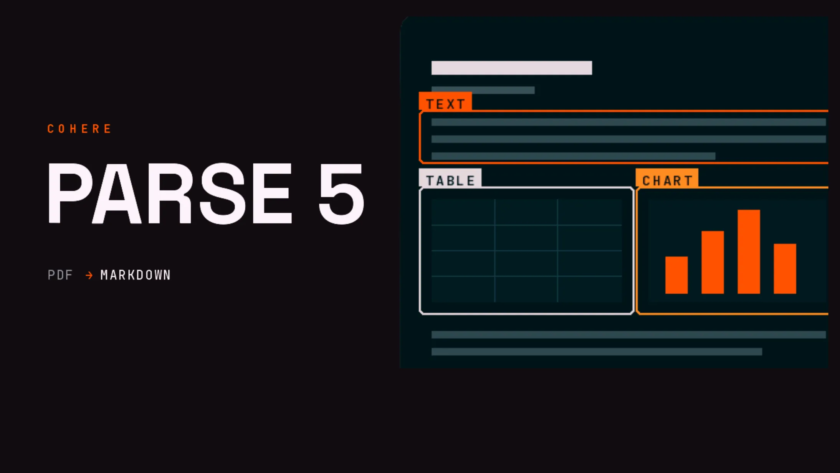
Cohere has released Parse (parse-v5.0), a document parsing model aimed at high-volume enterprise ingestion. It is a 2.3B-parameter vision language model with an 8,192-token context window and a ~4.6GB footprint, built on Cohere Labs’ North-Micro-Vision-Instruct architecture. Parse takes a PDF, PPT or JPEG page as a base64-encoded data URI and returns Markdown containing text in…
Today, we’re introducing Gemini Omni 1.1 Flash, a new suite of creative controls and generative video capabilities to support developers. Gemini Omni brought real-world reasoning to generative creation, and today’s updates make Omni 1.1 production-ready for professional use via the Gemini API in Google AI Studio. Whether you’re building generative video workflows, creative tools, or…