
Most discussions about AI SEO are still focused on content. How do I get cited by ChatGPT? How do I optimize for Perplexity? What format does an LLM prefer? I think that may only be the first layer. The deeper shift is structural. Today’s websites are largely organized around pages. But an AI agent is trying to understand: entities attributes…

admin
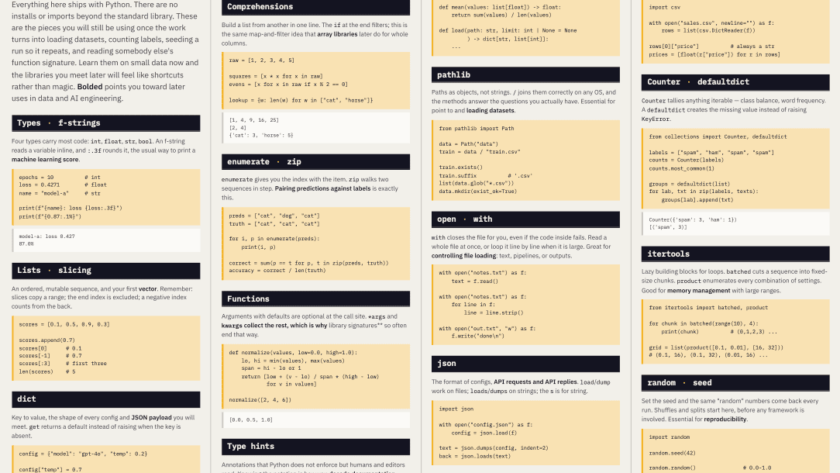
Newcomers headed for data and AI work tend to treat the basics of Python as a waiting room. The plan is often just to get through them quickly and arrive at the prime time libraries, where the real work is assumed to happen. It is an understandable plan. However, it produces a particular kind of…
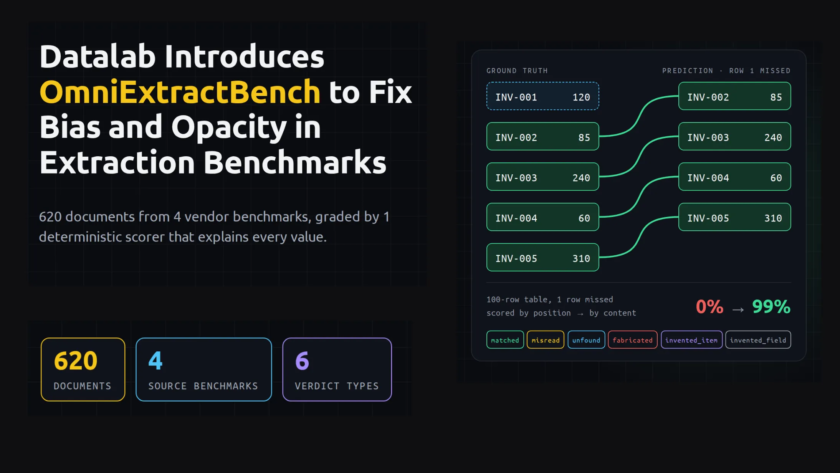
Datalab has released OmniExtractBench, an open benchmark for structured document extraction. It tests how accurately a system fills a JSON schema from a PDF. The benchmark pools 620 documents from 4 existing benchmarks. One deterministic scorer grades all of them and explains each decision.
The release lands while extraction vendors publish their own leaderboards. Datalab…
Enabling coding and enterprise workflows across domains Gemini 4 Argon’s capabilities across coding, reasoning, and multimodality and its ability to sustain long, multi-step tasks enable it to excel across a range of enterprise workflows. Google engineers have been using Argon for their daily tasks, from everyday debugging to large-scale codebase migrations and algorithm designs. It…
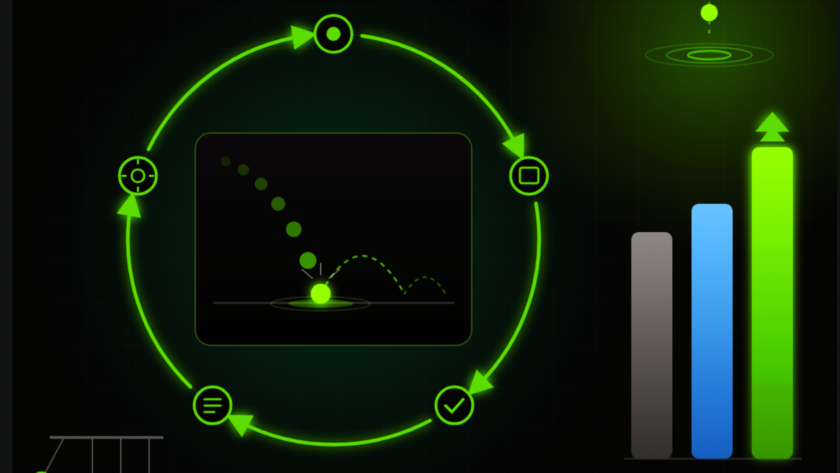
Video world models can render convincing clips that still break physics. Butter spreads like paint. Balls pass through walls. A team from NVIDIA, MIT and the University of Oxford argues the fix can come from language itself, not from extra visual, latent or numerical signals.
Their framework, Physis-Lang, treats physical language as a shared, optimizable…
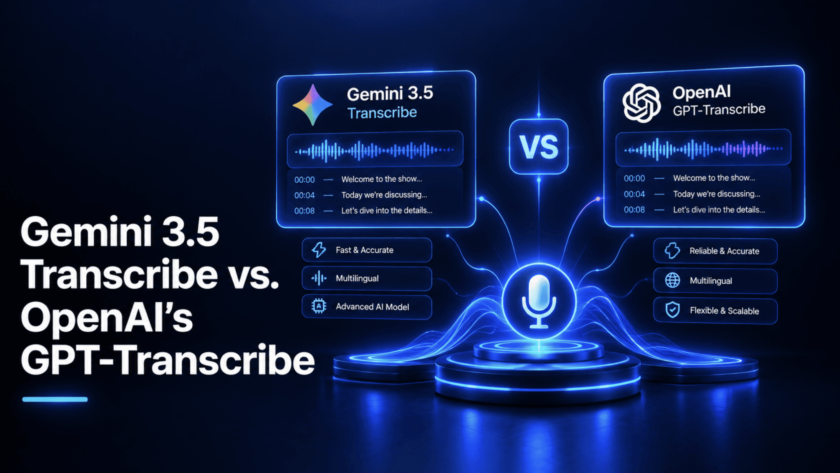
Google shipped Gemini 3.5 Transcribe on August 26, 2026, and the timing makes it a genuinely useful comparison. OpenAI had released its own current flagship transcription model, GPT-Transcribe, just four weeks earlier, on July 28, 2026. Two labs, two new transcription models, released close enough together that comparing them actually means something right now instead…
A Live Avatar to fit your brand needs Organizations often need distinct visual identities to fit their brand. In addition to a library of diverse, preset avatars, organizations can customize their Live Avatars. From a high-quality reference image, developers can generate a fully animated, responsive avatar while preserving reference likeness, brand styling, or character identity.…
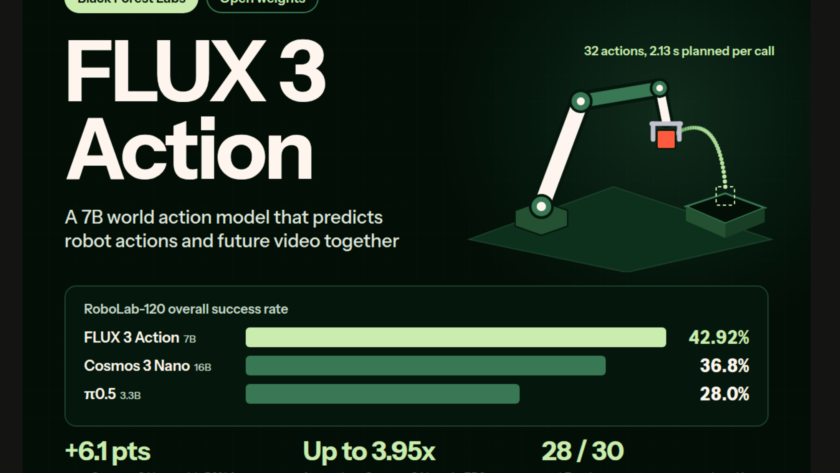
Black Forest Labs Releases FLUX 3 Action: A 7B Open-Weights World Action Model That Tops RoboLab-120
Black Forest Labs (BFL), the lab behind the FLUX image models, has released FLUX 3 Action. It is a 7B open-weights World Action Model (WAM) for robot control. The model reads camera frames, robot state and a text instruction. It then predicts future video frames and the next chunk of actions together. On the RoboLab-120…
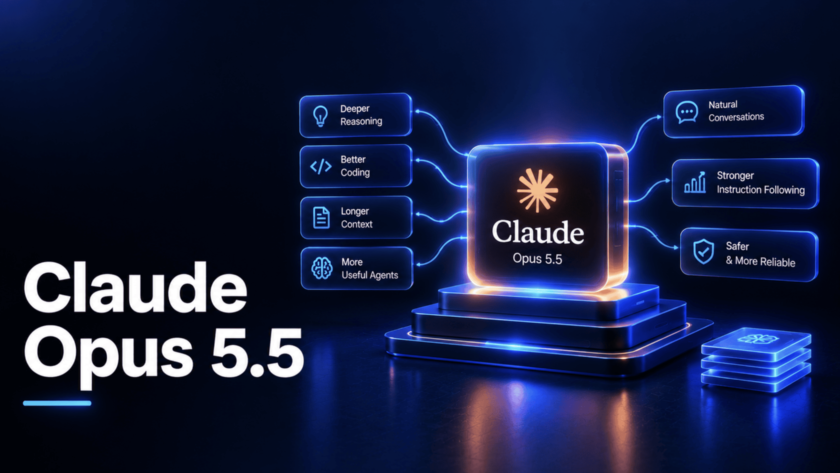
Anthropic released Claude Opus 5.5 on September 22, 2026. It's the first model in the new Claude 5.5 family, and according to Anthropic's own announcement, it performs at roughly the level of Claude Fable 5.1 on most work while costing 40% less to run than Opus 5. This article pulls together every verifiable number and…
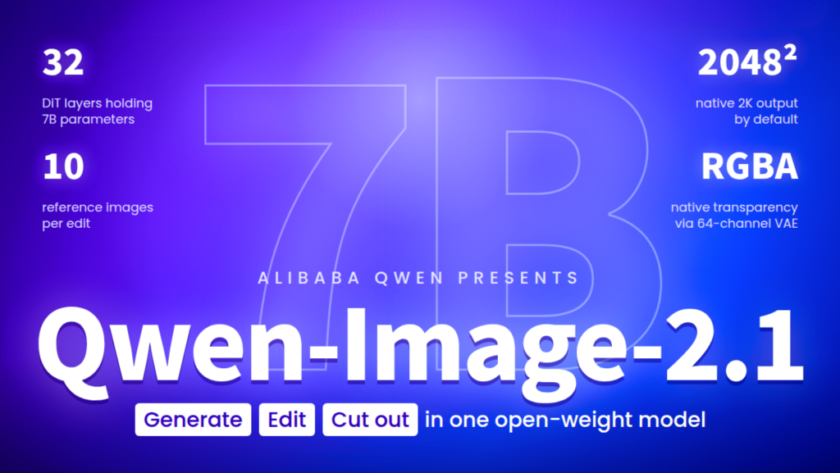
Alibaba’s Qwen team has released Qwen-Image-2.1, a unified text-to-image generation and image editing model. Its visual generation component has 7B parameters across 32 single-stream DiT layers. One checkpoint covers text-to-image, multi-reference editing, local edits, and transparent RGBA output.
Is it deployable? Yes, for research and evaluation. Day 0 support covers Diffusers, ComfyUI, vLLM-Omni, SGLang,…