Skip to content Skip to sidebar Skip to footer

Author page: admin

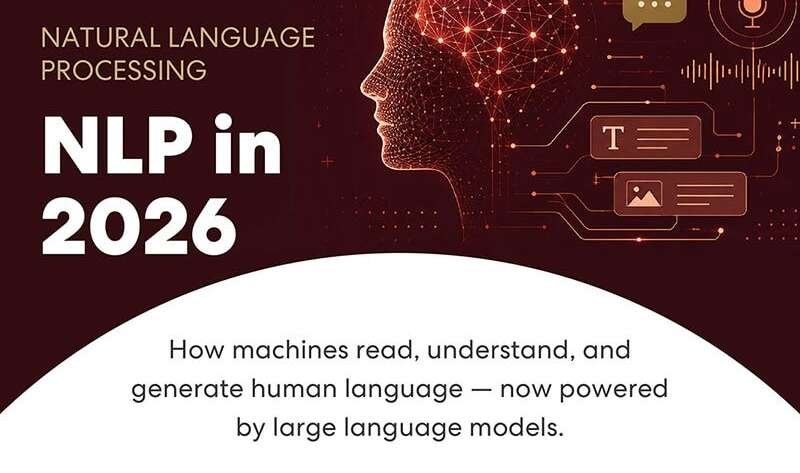
NLP in 2026: Trends, Use Cases & Future of Language AI | Shaip

Every day, your organization produces a mountain of words. Support tickets, contracts, clinical notes, customer reviews, emails, call transcripts. Roughly 80% of all enterprise data exists as unstructured text like this — and until recently, almost none of it could be analyzed at scale. It just sat there. Natural Language Processing changed that. And in 2026, with large…

Read More

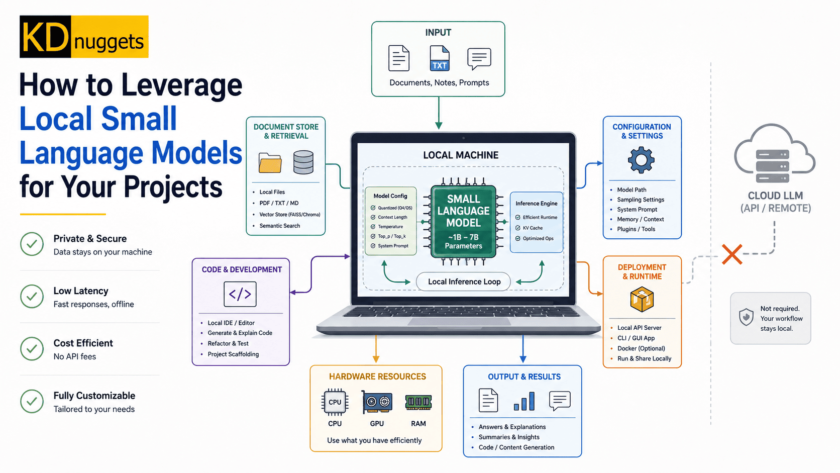
How to Leverage Local Small Language Models for Your Projects

  For a while, the default assumption was that bigger meant better. Developers routed their applications through cloud APIs, accepting latency, usage costs, and data exposure as unavoidable trade-offs. That assumption no longer holds. Small language models (SLMs) have matured significantly. These models typically range from 1 billion to 13 billion parameters, compact enough to…

Read More

Xiaomi’s MiLM Plus Releases PROVE: Perception-Aligned Object Removal Metrics RC-S and RC-T With a Real-World Video Benchmark

Object removal models have improved faster than the metrics used to judge them. Diffusion erasers now reconstruct shadows, reflections and occluded structure convincingly, yet PSNR, SSIM, LPIPS, ReMOVE and CFD frequently rank their outputs the wrong way. The root cause is structural: erasure is an ill-posed, one-to-many task, so no single ground truth exists to…

Read More

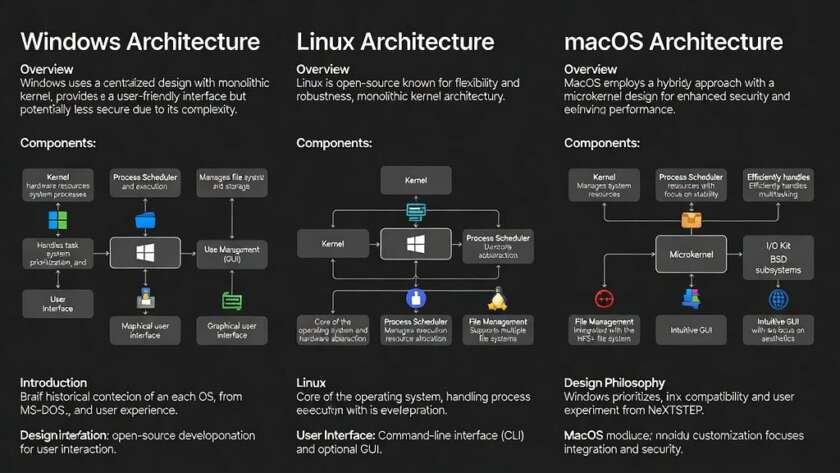
Modern Operating Systems for AI Agents

An operating system (OS) is the fundamental software that acts as an intermediary between computer hardware and user applications. It manages hardware resources such as the CPU, memory, storage, and input/output devices, while providing essential services like process scheduling, file management, security, and user interfaces. Without an OS, users would need to interact directly with…

Read More

Developing an End-to-End Document Intelligence Pipeline with docTR for OCR, Layout Analysis, KIE, Benchmarking, and Searchable PDFs

import os, sys, io, json, time, math, re, subprocess, warnings from collections import Counter, defaultdict warnings.filterwarnings("ignore") os.environ.setdefault("USE_TORCH", "1") def _pip(*pkgs): subprocess.run([sys.executable, "-m", "pip", "install", "-q", *pkgs], check=False) try: import doctr except ImportError: print(">> Installing python-doctr (this takes ~1-2 min on Colab)...") _pip("python-doctr[viz]") try: import reportlab except ImportError: _pip("reportlab") import numpy as np import…

Read More

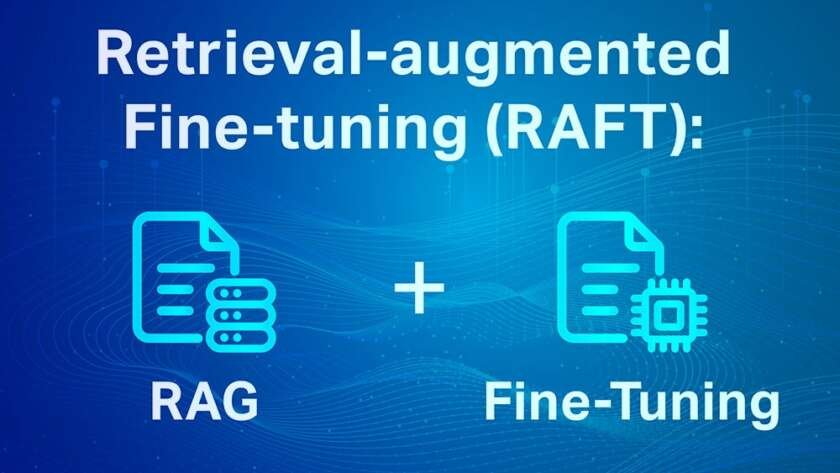
What is RAFT? RAG + Fine-Tuning

In simple terms, retrieval-augmented fine-tuning, or RAFT, is an advanced AI technique in which retrieval-augmented generation is joined with fine-tuning to enhance generative responses from a large language model for specific applications in that particular domain. It allows the large language models to provide more accurate, contextually relevant, and robust results, especially for targeted sectors…

Read More