…
Image by Author
# Introduction
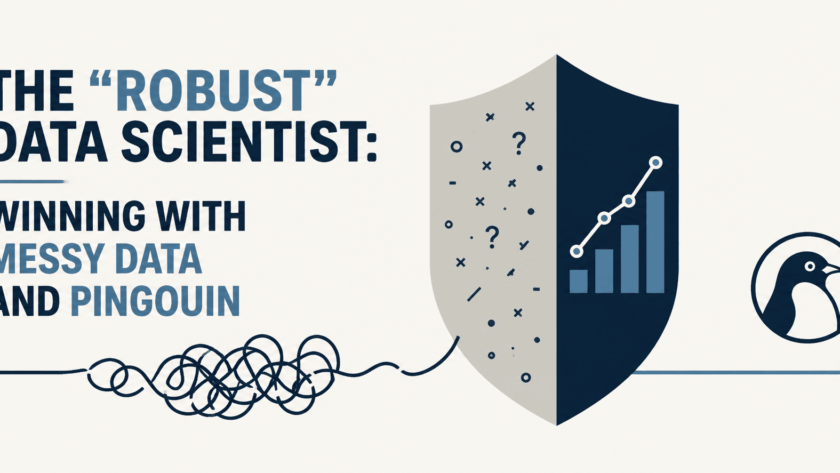
If you are reading this article, you likely know a bit of Python, and you are curious about data science. You might have written a few loops, maybe even used a library like Pandas. But now you face a common problem. The field of data science is vast,…
Thinking Machines Lab has moved its Tinker training API into general availability and added 3 major capabilities, support for the Kimi K2 Thinking reasoning model, OpenAI compatible sampling, and image input through Qwen3-VL vision language models. For AI engineers, this turns Tinker into a practical way to fine tune frontier models without building distributed training…
Catalyzing breakthroughs in science By proving it could navigate the massive search space of a Go board, AlphaGo demonstrated the potential for AI to help us better understand the vast complexities of the physical world. We started by attempting to solve the protein folding problem, a 50-year grand challenge of predicting the 3D structure of…
In this tutorial, we walk step by step through using Hugging Face’s LeRobot library to train and evaluate a behavior-cloning policy on the PushT dataset. We begin by setting up the environment in Google Colab, installing the required dependencies, and loading the dataset through LeRobot’s unified API. We then design a compact visuomotor policy that…
Image by Editor
# Introduction
Python decorators are tailor-made solutions that are designed to help simplify complex software logic in a variety of applications, including LLM-based ones. Dealing with LLMs often involves coping with unpredictable, slow—and frequently expensive—third-party APIs, and decorators have a lot to offer for making this task cleaner by wrapping,…
In this tutorial, we explore how we use Daft as a high-performance, Python-native data engine to build an end-to-end analytical pipeline. We start by loading a real-world MNIST dataset, then progressively transform it using UDFs, feature engineering, aggregations, joins, and lazy execution. Also, we demonstrate how to seamlessly combine structured data processing, numerical computation, and…
Today, we're introducing Gemini 3.1 Flash-Lite, our fastest and most cost-efficient Gemini 3 series model. Built for high-volume developer workloads at scale, 3.1 Flash-Lite delivers high quality for its price and model tier. Starting today, 3.1 Flash-Lite is rolling out in preview to developers via the Gemini API in Google AI Studio and for enterprises…